
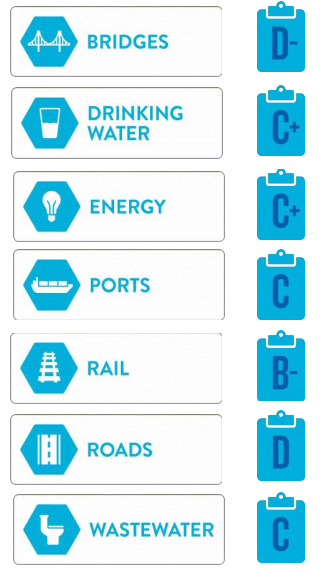
ASCE has assessed Rhode Island’s overall grade to be a…

Infrastructure Matters
Good infrastructure is among the key elements that contributes to a high quality of life. From our roads, bridges, ports, and rail, which impact our ability to move people and cargo; to our drinking water and wastewater, which impact the health of our residents and businesses’ to our energy sources, which power our daily lives - Rhode Island’s infrastructure is essential to supporting the needs of those who call it home or are welcomed to its shores. While many Rhode Islanders might not think about infrastructure every day, Rhode Island’s civil engineer’s do! We work hard to build and maintain our infrastructure systems for the public’s health, safety, and welfare.
As a state with a significant coast line, Rhode Island must adquately invest in its critical infrastructure, such as wastewater facilities, drinking water systems, and port structures, to ensure they can protect the natural environmental and withstand sea level rise and impacts from extreme weather events. In additiona, Rhode Island has been challenged by under investment in roads and bridges, leading to structural deficiencies. However, leaders in state are addressing these challenges head on, by prioritizing investment in roads and brides to improve safety and reliability. Beyond mitigation, Rhode Island looks to the future by proactively improving its rail systems and maintaining its leadership in the growing renewable energy industry.
CLICK HERE FOR MORE INFORMATION AND TO DOWNLOAD THE FULL REPORT CARD
The grades were released via a Virtual News Conference on June 24th, 2020.
During the Conference, ASCE RI President Elect, Chad Morrison and ASCE RI Report Card Chair, Nazifa Sarawat, described the grades and solutions to raise the grade. Additionally, Mayor James Diossa of Central Falls, Manager of Long Range Planning for RIPTA - Sarah Ingle, and Narraganset Bay Commission Engineering Manager - David Bowen, provided updates on what they are doing and plan to do to raise the grade in Rhode Island.
Play the recording Below.
(Begins at 3:35)
Solutions to Raise the grade
Improve multi-modal freight and landslide connections to ports to strengthen the entire freight system and reduce congestion that is costly to industries, local governments, and the state’s economy when moving goods.
Increase in-state capacity for electricity generation to improve supply, reduce costs, ease regional market effects, and recoup expenses by supporting renewable power generation with financial incentives, regulations that promote growth, and industrial/logistics resources.
Continue to support the RhodeWorks plan and its emphasis on reaching a state of good repair for bridges and advocate additional long-term federal and state funding programs for infrastructure to deliver consistent, reliable funding that is adjusted for inflation.
Continue to develop infrastructure resiliency plans that address natural disasters and man-made extreme events. Incorporate the impacts of climate variations (sea level rise, extreme storm events) into the design, operation, maintenance, and expansion of all types of infrastructure to improve community resilience - reducing the time and extent that households, businesses, and critical services in Rhode Island are affected during and after natural and man-made disruptions.
Mainstream tools for data-driven decision-making across all of Rhode Island’s infrastructure sectors, including asset management software, life-cycle cost analysis, and affordable rate structuring.
Pivot new construction, rehabilitation, and post-disaster rebuilds towards the use of consensus-based codes, specifications, and standards.
How does RI’s Grade measure up against America’s?
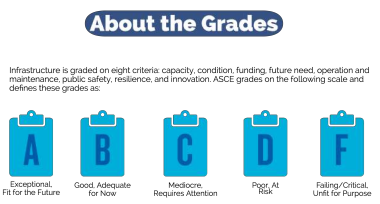
ASCE’s Infrastructure Report Card provides a comprehensive assessment of current infrastructure conditions and needs, assigning grades and making recommendations to raise them. The 2017 Report Card found the national grade for infrastructure to be a D+.
Check out America's Report Card to learn more!
Report Card Committee
Chad T. Morrison, P.E. - Nazifa N. Sarawat, E.I.T. - L. Robert Smith, P.E. - Taber Midgley, P.E. - Timothy Franciosa, P.E.
ASCE Staff
Anna Denecke - Christine Prouty - Kevin Longley - Alexa Lopez - With support from Blakey & Agnew, LLC
Graphic Design
Ben Barber, D&B Media